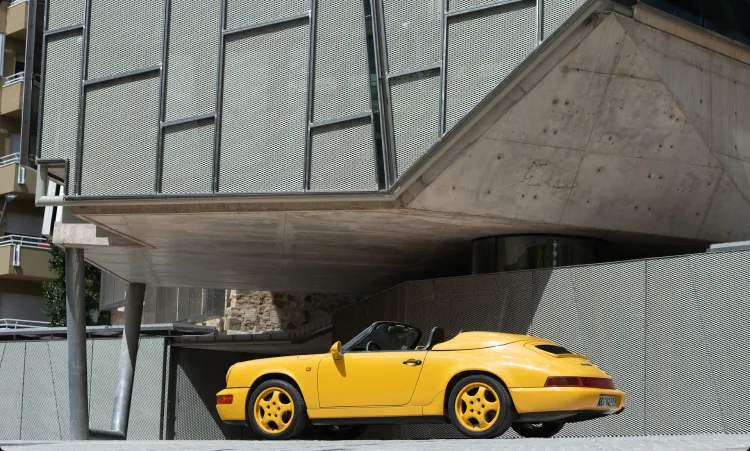
The best location gives the car a relationship to its surroundings and enough room for its design to read clearly.
Plan the first frame
Look at the lines in the background. A wall or horizon that follows the roofline can help the design read. A busy façade or a bright object behind the car can pull attention away from the body or interrupt its silhouette.
Work with the conditions
Then look at reflections. Walk around the parked car and watch how the setting appears across the paint. A quiet wall may give a cleaner reflection than an open sky broken up by trees and signs.
Build the final edit
Finally, design the edit. A wide frame explains why the car is there, a side view shows the profile and a closer frame can pick up the surface or a particular design detail. Each image should have a distinct role.